The Senior Dog Diet: What Changes After Seven
Older dogs do not all need special food, but most benefit from a second look at what is in the bowl. A general guide to labels, portions and routine.
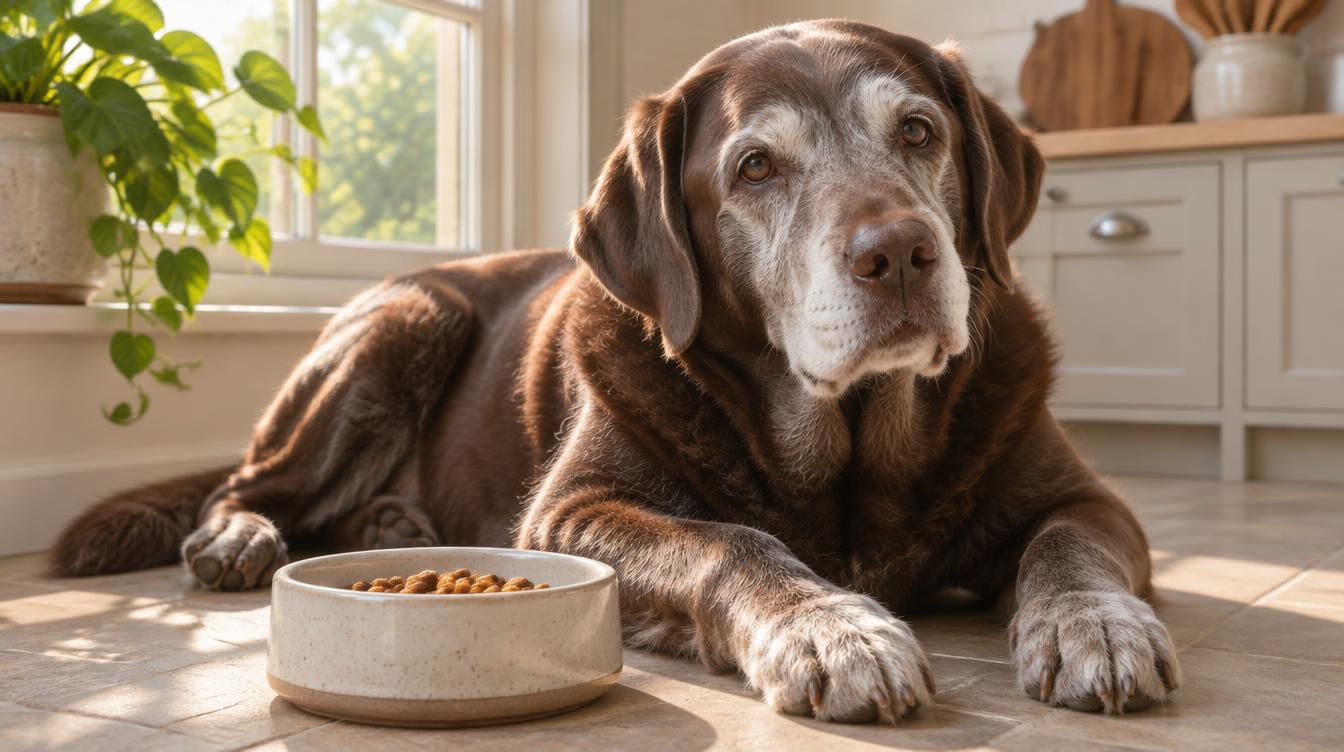
One day you notice the grey around the muzzle. The walks are a little shorter, the naps a little longer, and the question arrives: should I be feeding something different?
Sometimes yes, sometimes no. Age alone does not decide it. This is a general guide to what tends to change. Your veterinarian, who knows your dog, should have the final word.
When is a dog a senior?
There is no single birthday. Smaller dogs tend to live longer and are considered senior later. Very large breeds age faster.
Many vets suggest more frequent check-ups from around this stage, which is a natural moment to talk about food.
What usually changes
Older dogs are often less active, and a less active dog burns fewer calories. If the bowl stays the same while the walks get shorter, weight creeps on.
Other dogs go the opposite way and lose weight or muscle as they age. That is one reason a single rule does not fit every older dog.
Feed the dog in front of you, not the age on the bag.
What the word senior means on a label
In the United States, complete pet foods are formulated to recognised nutrient profiles for growth or for adult maintenance. There is no separate official profile for senior dogs.
That means senior recipes vary widely between brands. Some are lower in calories, some are higher in protein and some differ very little from the adult version.
Read the label rather than relying on the word on the front.
Reading the bag
Three things are worth finding on any dog food label.
- The nutritional adequacy statement, which says the food is complete and balanced and for which life stage.
- The calorie content, usually given per cup or per can.
- The feeding guide, which is a starting point, not an instruction.
Calorie content varies enormously between foods. A cup of one brand can contain half as many calories again as a cup of another, so always check when you switch.
Protein still matters
It was once common to assume older dogs needed less protein. Many nutritionists now emphasise good-quality protein for healthy older dogs, to help maintain muscle.
Some health conditions do call for specific diets. That is a decision for your vet, based on examination and tests, not something to guess from a label.
Watching weight
Extra weight is hard on ageing joints, and it is much easier to prevent than to reverse. Check your dog's shape regularly, not only the number on the scale.
You should be able to feel the ribs under a thin covering without pressing hard, and see a waist from above. Your vet can show you how to score body condition in a couple of minutes.
| What you notice | What it may suggest | First step |
|---|---|---|
| Ribs hard to feel, no waist | Carrying extra weight | Measure meals, review treats, ask your vet |
| Ribs and hips prominent | Underweight or losing muscle | See your vet |
| Shape steady, good energy | Diet suits them | Keep going, recheck monthly |
Measure, do not pour
Scooping by eye is the most common cause of gradual weight gain. Use a proper measuring cup or, better still, kitchen scales.
Count treats as part of the day's food. A widely used guideline is to keep them to around a tenth of daily calories.
Texture and appetite
Some older dogs find hard kibble less appealing or harder to manage. Adding a little warm water, or mixing in some wet food, can make meals easier and more tempting.
A noticeable change in appetite, in either direction, is worth mentioning to your vet rather than simply working around.
Water
Keep fresh water available in more than one place, especially if stairs have become harder. Wet food also adds moisture to the diet.
A marked increase in thirst is another change to report to your vet.
Changing food gradually
If you do switch, do it slowly. Mix a little of the new food into the old and increase the proportion over a week to ten days.
A sudden switch is a common cause of upset stomachs at any age, and older dogs are often less tolerant of it.
Supplements
Shelves are full of supplements aimed at older dogs. Some may help some dogs. Others do little.
Ask your vet before adding anything, particularly if your dog takes medication. A complete and balanced food already contains the essential nutrients.
Routine counts
Older dogs often do well with two or three smaller meals at regular times rather than one large one. A raised bowl may be more comfortable for some dogs, though it is worth asking your vet whether it suits yours.
Calm, predictable mealtimes matter more as dogs age.
The simple version
Many healthy older dogs do well on the food they have always eaten, in portions adjusted to their activity. Others benefit from a change.
Look at your dog's shape, energy and appetite, read the label and talk to your vet at the next check-up. The right diet is the one that keeps your dog bright-eyed, comfortable and waiting by the bowl.