A Happier Indoor Cat: Space, Play and Routine
Indoor cats are safer, and they rely on you for everything the outdoors would have provided. A practical guide to making a home interesting from a cat's point of view.

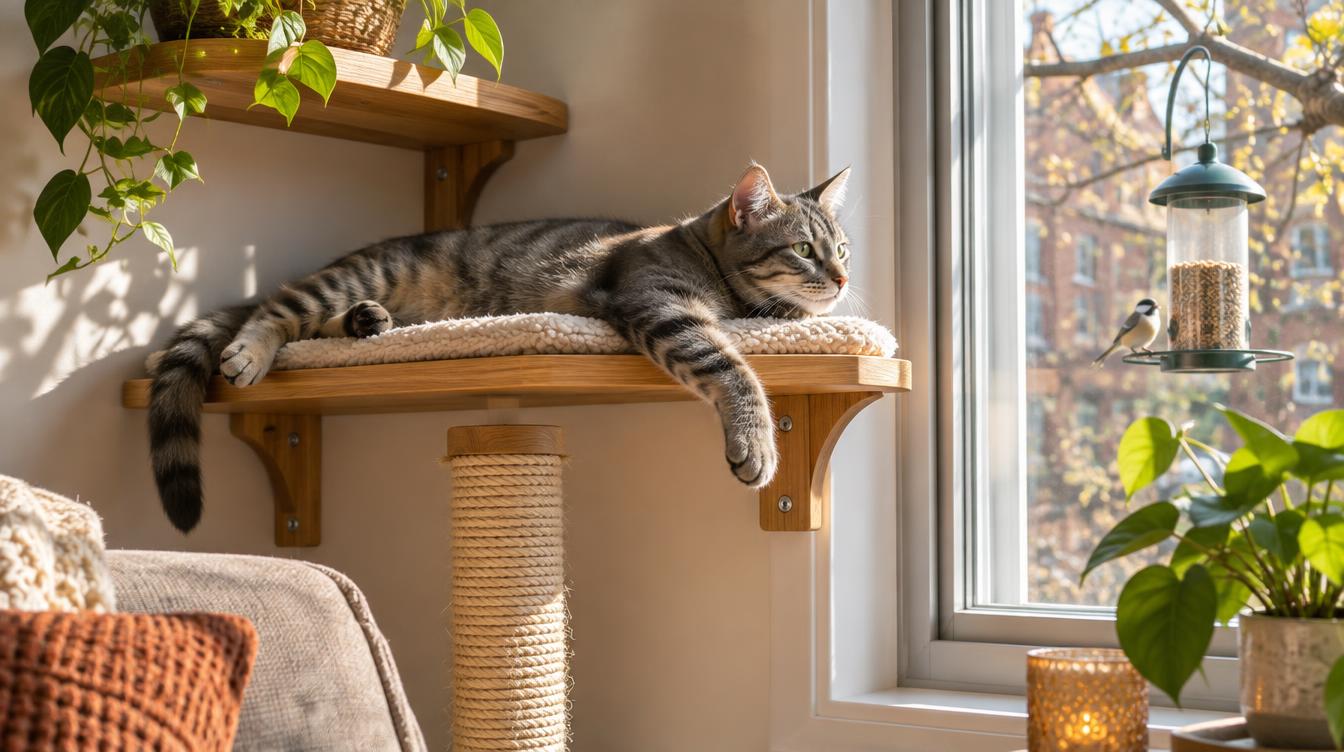
- Cats value height. Shelves, cat trees and window perches add territory without adding floor space.
- Two short play sessions a day that mimic hunting do more for a cat's mood than a basket of toys.
- Provide one litter box per cat, plus one, in quiet places away from food.
A cat that lives indoors is protected from traffic, fights and a long list of hazards. It is also living in a world that never changes unless you change it.
In the wild, a cat's day is filled with patrolling, climbing, stalking and many small meals. An indoor cat still has every one of those instincts. The art of keeping one happy is to give those instincts somewhere to go.
Think vertically
Cats measure territory in three dimensions. A high place is a vantage point, a retreat and, for a cat, a great comfort.
You do not need a large home. You need levels. A tall cat tree, a cleared bookshelf, a wall-mounted shelf or a perch that attaches to a windowsill all multiply the space available.
In homes with more than one cat, height is especially valuable. It allows cats to share a room while keeping their distance.
To a cat, a room with shelves is twice the size of a room without them.
A window on the world
A window is a cat's television. Birds, squirrels, passing people and moving leaves provide hours of interest.
Place a perch or the top of a cat tree beside a window with a view. A bird feeder outside, positioned where the cat can watch safely, turns an ordinary window into the best seat in the house.
Make sure windows have secure screens, particularly above ground level.
Scratching is not misbehaviour
Scratching keeps claws in condition, stretches the muscles of the back and shoulders and leaves scent marks. A cat that cannot scratch something suitable will scratch something else.
- Choose a post tall enough for the cat to stretch fully upright.
- Make sure it is heavy and stable. A post that wobbles will be ignored.
- Offer both vertical and horizontal surfaces.
- Place posts near sleeping areas and by the furniture the cat currently prefers.
Sisal rope and corrugated cardboard are both popular. Many cats have a clear preference, so it is worth trying more than one.
Play like a hunter
Play is practice hunting, and it follows a pattern: stalk, chase, pounce, catch. Toys left on the floor do little. Toys that move like prey do a great deal.
A wand toy with a feather or a small lure is ideal. Move it away from the cat, around corners and under a rug, the way a mouse would move. Let the cat catch it regularly.
Two sessions of ten to fifteen minutes a day suit most adult cats, ideally in the morning and early evening, when cats are naturally most active. Finish with a small meal or a few treats, which completes the sequence.
Make food more interesting
A bowl of food twice a day is convenient and, from the cat's point of view, rather dull. Feeding can be turned into an activity.
Puzzle feeders make a cat work a little for its food. Start with an easy one. You can also scatter a portion of dry food for the cat to find, or hide small amounts around the house.
Several small meals suit a cat's natural pattern better than one or two large ones. Measure the day's food so that puzzles and treats do not add extra.
Litter boxes
Litter box arrangements cause more household friction than any other aspect of cat ownership, and most problems are preventable.
| Guideline | Why |
|---|---|
| One box per cat, plus one | Prevents queuing and guarding |
| Boxes in separate, quiet locations | A cat needs to feel safe and unobserved |
| Away from food and water | Cats avoid eliminating near where they eat |
| Scooped daily, fully cleaned regularly | Many cats refuse a dirty box |
| Large enough to turn around in | Many commercial boxes are too small |
If a cat that has always used its box suddenly stops, see your vet. A change in toilet habits is often the first sign that something is wrong.
Places to hide
Cats need somewhere to withdraw. A covered bed, a cardboard box on its side or a shelf at the back of a wardrobe gives a cat control over its surroundings.
When a cat is hiding, let it be. A cat that knows it can retreat is more confident, not less.
Routine
Cats are creatures of habit. Meals, play and quiet time at roughly the same hours each day make a cat feel secure.
Introduce changes gradually where you can, whether that is new furniture, a new person or a new pet.
A taste of the outdoors
Some cats are content indoors. Others plainly want more. There are safe ways to provide it.
- A secure outdoor enclosure, sometimes called a catio.
- A cat-proofed balcony with solid netting.
- Harness and lead walks, introduced slowly and patiently.
- Pots of cat grass or catnip indoors.
Check that any houseplants are safe for cats. Several common ones, including lilies, are toxic to them.
More than one cat
In multi-cat homes, tension usually comes from competition. Spread resources around the house: food bowls, water, litter boxes, beds and perches in several places, so no cat can control access to all of them.
Signs a cat needs more
Excessive sleeping, overeating, scratching furniture, pestering at night and overgrooming can all suggest boredom or stress. They can also indicate a health problem.
Any marked change in behaviour deserves a conversation with your vet before you assume it is boredom.
A small investment
None of this requires a large home or much money. A shelf, a sturdy post, a wand toy and twenty minutes a day cover most of it.
The result is a cat that is calmer, fitter and more engaged, and a home with fewer shredded sofa arms.
Frequently asked questions
How do I keep an indoor cat entertained?
Offer vertical space to climb, sturdy scratching posts, a window with a view, puzzle feeders and two short interactive play sessions each day. Rotating toys every week or so keeps them interesting.
How many litter boxes does a cat need?
A widely used guideline is one litter box per cat, plus one extra, placed in different quiet locations. Boxes should be scooped daily and kept away from food and water.
Is it cruel to keep a cat indoors?
No, provided the cat's needs for play, climbing, scratching and stimulation are met. Indoor cats avoid traffic and many outdoor hazards. Safe outdoor access, such as a secure enclosure or harness walks, can add variety for cats who enjoy it.