Bringing a Puppy Home: The First Week, Day by Day
The first seven days set the routine for the next fifteen years. A calm, practical plan for sleep, toilet training, feeding and the first vet visit.
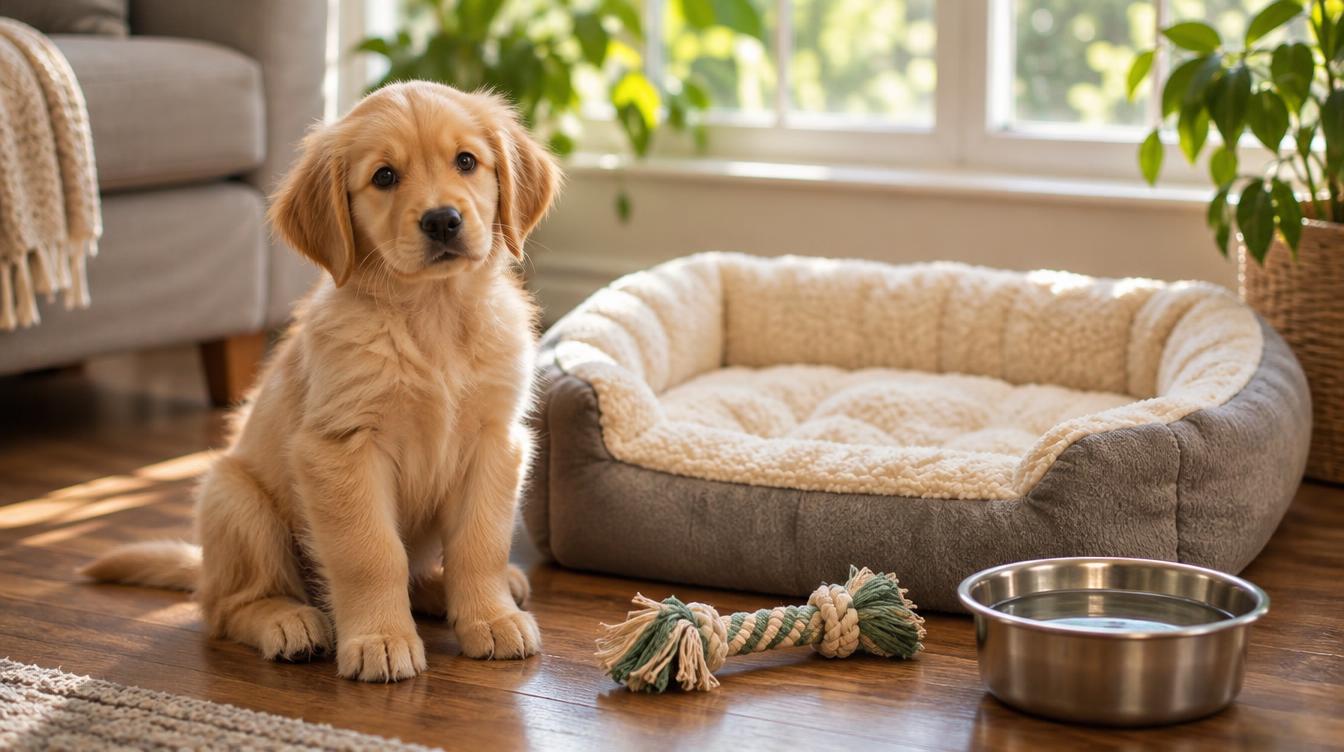
- Keep the first days quiet and predictable. A new puppy needs sleep and routine far more than visitors.
- Take the puppy outside after every sleep, meal and play session, and reward toilet trips immediately.
- Book a vet visit in the first few days, and ask the vet when it is safe to meet other dogs.
There are few days as happy as the one a puppy comes home. There are also few weeks as tiring as the one that follows. Both things are normal.
A puppy arrives having just left its mother, its littermates and everything familiar. What it needs most is calm, sleep and a routine it can predict. Provide those and almost everything else follows.
Before the puppy arrives
A little preparation saves a great deal of scrambling. Get down to floor level and look at your home from a puppy's height.
- Move electrical cables, shoes and houseplants out of reach.
- Fit a baby gate to keep the puppy in one or two rooms at first.
- Put cleaning products, medicines and food in closed cupboards.
- Check the garden fence for gaps.
Have the basics ready: a bed, a crate if you plan to use one, bowls, a collar and lead, a few safe chew toys and the food the puppy is already eating.
Day one: arrive quietly
Collect the puppy in the morning if you can, so there is a full day to explore before the first night. Go straight home.
Take the puppy to the toilet spot in the garden first. Then let it explore one room at its own pace. Keep the household calm, and ask friends to wait a few days before visiting.
Expect a lot of sleeping. Young puppies commonly sleep for most of the day, in short bursts between bouts of play.
A tired puppy is not being naughty. It is being a baby. Put it to bed.
The first night
The first night is often the hardest. The puppy has never slept alone.
Many trainers suggest placing the crate or bed beside your own bed for the first week. The puppy can hear and smell you, which is reassuring, and you will wake when it stirs and needs to go out.
Expect to get up once or twice. Take the puppy out quietly, with no play, and straight back to bed.
Toilet training starts immediately
The principle is simple: give the puppy so many chances to go in the right place that it rarely has the chance to go in the wrong one.
Take it out after waking, after eating, after playing and whenever it starts sniffing and circling. Go with it, wait, and reward with praise and a small treat the moment it finishes.
Accidents will happen. Clean them with an enzyme cleaner that removes the scent, and never scold. Punishment teaches a puppy to hide from you, not where to go.
Feeding
Keep the puppy on the same food it was eating before, at least for the first week or two. A new home is enough change for a small stomach.
Young puppies usually eat three or four small meals a day. Follow the guidance on the food and from your vet, and feed at the same times each day, which makes toilet trips more predictable.
If you want to change food later, do it gradually over a week or more.
The first vet visit
Book an appointment within the first few days. Bring any paperwork from the breeder or rescue, including records of vaccinations and worming.
The vet will examine the puppy and set out a schedule for vaccinations and parasite prevention. It is also the time to ask about microchipping, neutering and when the puppy can safely go to public places.
| Day | Focus | Keep in mind |
|---|---|---|
| 1 | Arrive, explore one room, first toilet trips | Quiet house, no visitors |
| 2 | Establish meal and toilet routine | Short play, long naps |
| 3 | Introduce the crate or bed for daytime naps | Make it pleasant, never a punishment |
| 4 | Vet visit | Bring records and your questions |
| 5 | Gentle handling: paws, ears, mouth | A few seconds, with treats |
| 6 | First short periods alone in a safe space | A minute or two, building slowly |
| 7 | Begin name recognition and a simple sit | Two-minute sessions |
Meeting the world
The early weeks are when puppies most readily accept new sights, sounds and people. Good experiences now help produce a confident adult dog.
That has to be balanced against the risk of disease before vaccinations are complete. Ask your vet what is safe in your area. Carrying the puppy to watch the world go by, and inviting calm visitors, are low-risk ways to start.
Go at the puppy's pace. If it hangs back, give it distance and let it watch. Never force an introduction.
Chewing and biting
Puppies explore with their mouths, and their teeth are sharp. This is normal and it passes.
Keep a chew toy within reach at all times. When teeth land on skin, calmly end the game for a few seconds and offer the toy instead. Consistency from everyone in the household matters more than the exact method.
Learning to be alone
A puppy that is never left alone can become distressed when it eventually is. Start in the first week with very short absences.
Settle the puppy in its safe area with a chew, step out of the room for a minute and return quietly. Build up gradually over the following weeks.
What to worry about and what not to
Hiccups, twitching in sleep, sudden bursts of running and a refusal to walk on the lead are all ordinary puppy behaviour.
Contact your vet promptly if the puppy stops eating, is repeatedly sick, has diarrhoea, seems unusually lethargic or has any difficulty breathing. Young puppies can become unwell quickly, and it is always better to ask.
Looking after yourself
The first week involves broken nights and constant supervision. Share the load if you can, take turns on the night shift and accept that the house will not be tidy.
It gets easier quickly. Most puppies sleep through the night within a few weeks.
The week in a sentence
Keep things calm, take the puppy out often, reward what you like and see your vet early.
Do that for seven days and you will have the beginnings of a routine, and a small dog that has decided this is home.
Frequently asked questions
How long does it take a puppy to settle in?
Most puppies begin to relax within a few days and feel at home within two to three weeks. Some whining at night during the first week is normal. A consistent routine for meals, toilet breaks and sleep is the quickest way to help them settle.
How often should a young puppy go outside to toilet?
Very often. Take a young puppy out after waking, after eating, after playing and at least every one to two hours in between during the day. Puppies gradually hold on longer as they grow.
When can my puppy meet other dogs?
Ask your veterinarian, because the answer depends on your puppy's vaccinations and the disease risk in your area. Many vets and puppy classes allow carefully managed contact with healthy, vaccinated dogs before the vaccination course is complete.